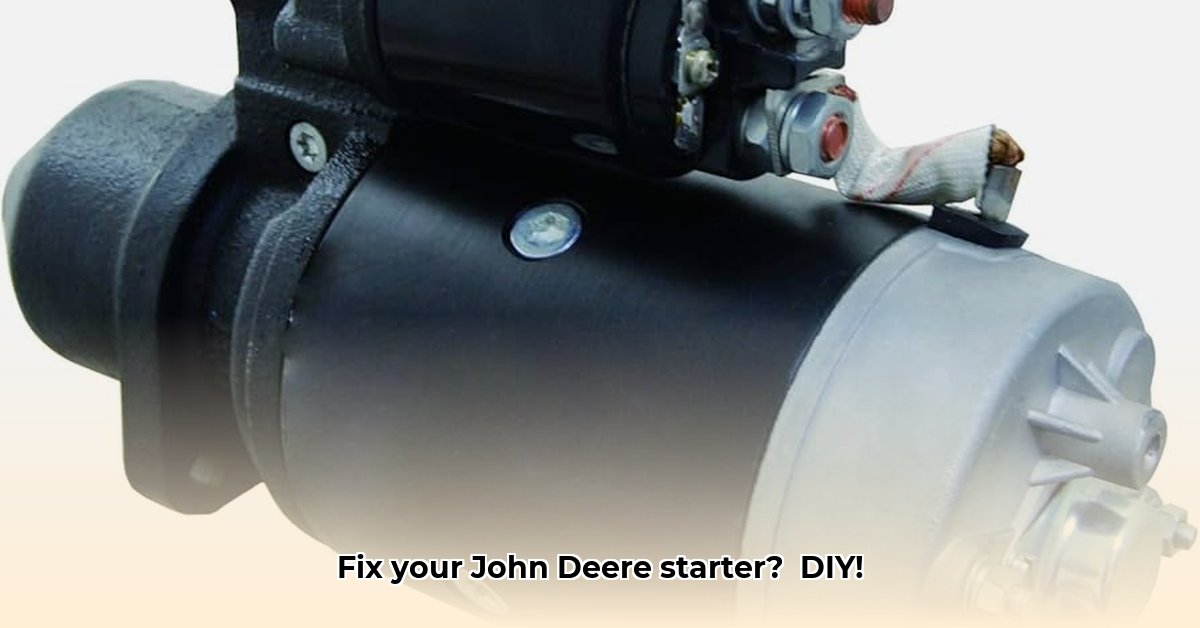
Getting your John Deere tractor back up and running can be frustrating, especially when a faulty starter motor is to blame. This comprehensive guide provides step-by-step instructions for replacing your John Deere tractor starter, including safety precautions, troubleshooting tips, and crucial torque information. Remember: always consult your owner's manual for model-specific details. Improper repair can lead to further damage or injury. For other maintenance needs, check out this guide on hydraulic fluid.
Safety Precautions: Prioritizing Your Well-being
Before you begin, remember that working on farm equipment involves inherent risks. Prioritize safety above all else. Failing to follow these steps could lead to serious injury or damage.
Disconnect the Battery: Always disconnect the negative (-) battery terminal first, followed by the positive (+) terminal. This prevents accidental short circuits and electrical shocks. Never work on the tractor with the battery connected.
Personal Protective Equipment (PPE): Wear appropriate safety glasses or goggles to protect your eyes from flying debris and sparks. Sturdy work gloves protect your hands from cuts and scrapes. Consider a dust mask if working in a dusty area.
Proper Tool Handling: Use only tools in good working condition. Ensure that your tools are the appropriate size and type for the job, and handle them carefully to prevent injuries. Familiarize yourself with the safe use of any tools before starting.
Consult OSHA Guidelines: For comprehensive safety guidelines, refer to relevant OSHA (Occupational Safety and Health Administration) or similar standards for working with heavy machinery and electricity.
Tools and Materials: Gathering Your Equipment
The necessary tools and materials will vary slightly depending on your John Deere model. Always check your owner's manual for model-specific requirements. However, you'll generally need:
- Replacement Starter Motor: Order the correct part number for your specific John Deere tractor model. Using the wrong starter will render this process futile.
- Socket Wrench Set: A variety of socket sizes (metric) will be needed, likely including 10mm, 12mm, and 14mm. Your owner's manual provides the precise sizes.
- Ratchet: A sturdy ratchet of appropriate size for your socket wrenches.
- Extension(s): To reach those hard-to-access bolts.
- Torque Wrench: Crucial for tightening bolts to the correct specifications. Improper torque can damage the starter or its mounting points.
- Penetrating Oil: To loosen seized bolts.
- New Bolts (if needed): Replace any damaged or stripped bolts with new ones.
- Wire Brush (optional): To clean battery terminals and other connections.
- John Deere Repair Manual: Your owner's manual is the ultimate guide; it contains model-specific instructions and torque specifications.
Step-by-Step Starter Replacement: A Detailed Guide
These steps provide a general overview. Your John Deere's specific repair manual will have model-specific details and diagrams. Consult it frequently.
Access the Starter: Locate the starter motor on your tractor. Consult your owner's manual for its precise location. You may need to remove other components to access it. Take photos as you disconnect components to aid reassembly.
Disconnect Wiring Harness: Carefully disconnect the wiring harness from the starter motor. Label wires if necessary to ensure correct reconnection.
Remove Mounting Bolts: Use the appropriate socket and ratchet to remove the bolts securing the starter motor. Apply penetrating oil if the bolts are seized. Don't force anything; this could damage the tractor.
Remove the Old Starter: Gently remove the old starter motor. Note its orientation and position for easy reinstallation.
Install the New Starter: Carefully install the new starter motor, ensuring it's aligned and sits correctly in its mounting location.
Secure with Bolts: Tighten the mounting bolts securely, but do not overtighten them. This is where your torque wrench is crucial.
Reconnect Wiring Harness: Reconnect the wiring harness, ensuring all connections are secure. Double-check each connection.
Reconnect the Battery: Reconnect the positive (+) terminal first, then the negative (-) terminal.
Test the Tractor: Attempt to start the tractor. Listen for any unusual noises or vibrations.
Troubleshooting Common Problems
Even with careful work, issues can arise.
- Tractor Won't Start: Check battery voltage, wiring connections, and ensure the starter is properly installed and securely fastened.
- Seized Bolts: Use penetrating oil and allow sufficient time for it to work before attempting to remove the bolts. Consider using bolt extraction tools if necessary.
- Wiring Issues: Inspect wiring connections for corrosion, loose connections, or damaged wires.
Refer to your owner's manual for comprehensive troubleshooting guidance specific to your model.
Torque Specifications: The Importance of Precision
This guide cannot provide specific torque specifications. Torque values vary significantly depending on your John Deere tractor model and engine type. Always consult your John Deere repair manual for the correct torque specifications. Using the incorrect torque can lead to damage.
Conclusion: Getting Back to Work
Replacing a John Deere tractor starter is a manageable DIY task with the right preparation and tools. By following these steps and consulting your owner's manual, you'll substantially increase your chances of success. Remember that safety is paramount. If you encounter any difficulties, or if you're unsure about any step, don't hesitate to consult a qualified mechanic.
Disclaimer: Limitation of Liability
This instructional guide provides general guidance only. Specific procedures and requirements may vary depending on your John Deere tractor model and engine type. The author and publisher assume no responsibility for any damage or injury resulting from following these instructions. Always consult your John Deere repair manual and exercise caution when performing this repair. The information provided herein is for educational purposes and does not constitute professional advice.